Guides
Flex Duct vs Metal Duct Cost: Which Is Cheaper?
Flex duct vs metal duct cost comes down to material price per foot, labor hours and lifespan. Here are real US supplier figures and where each type wins.
What to take away
- Flex duct runs roughly $1.50 to $4.50 per linear foot in materials; galvanized steel runs roughly $3.00 to $9.00, with insulated rigid board and fittings pushing the top of that range.
- Installed cost swings the other wayflex lands near $8 to $18 per foot, metal near $15 to $35, because metal needs more cutting, sealing and hanger labor.
- Flex wins on first cost and speed in open attic or crawlspace runs. Metal wins on airflow, lifespan and code acceptance in exposed or high-temperature locations.
- Neither type fixes a badly sized system or a leaky trunk line, and both lose capacity through unsealed joints.
What is being compared
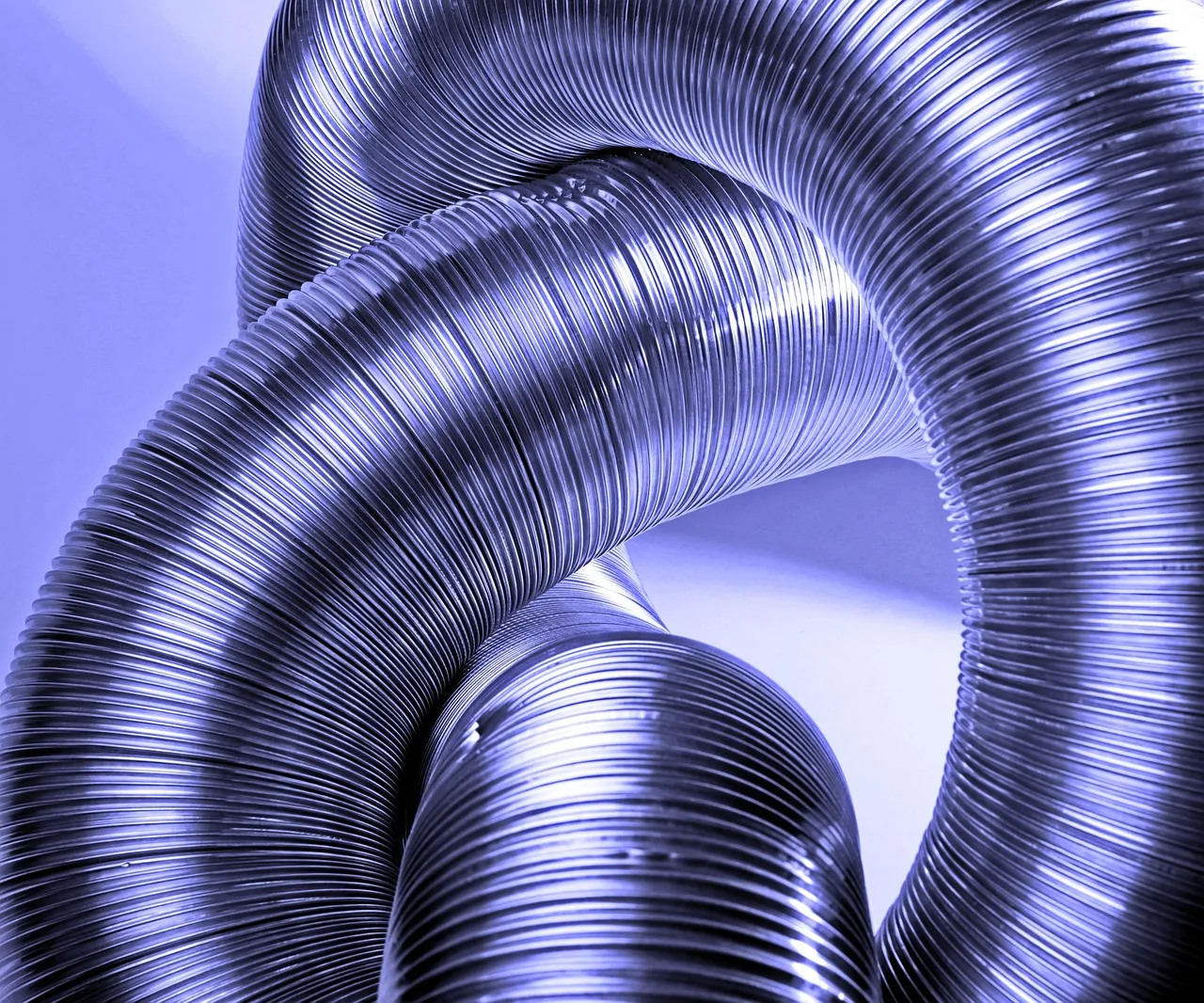
Two duct families sell at every US supply house: flexible duct, a coiled inner core wrapped in insulation, and rigid galvanized steel, sold as round pipe, rectangular trunk or lined board. Both move conditioned air from an air handler to registers.
They differ in how they are priced, how long they last and how much labor they absorb. Material choice is one of the largest single line items in a residential bid, and the line most often swapped after the estimate is signed.
The criteria that matter
Five criteria decide the answer for a given job.
Flex vs Metal Duct Criteria
Flex duct
- Material cost per foot
- $1.50-$4.50
- Installed cost per foot
- $8-$18
- Service life
- 10-15 years
- Airflow resistance
- Higher when sagging
- Best location
- Attics, crawlspaces
Galvanized steel
- Material cost per foot
- $3.00-$9.00
- Installed cost per foot
- $15-$35
- Service life
- 25-40 years
- Airflow resistance
- Lower, predictable
- Best location
- Basements, plenums
Flex duct
- Material cost per linear foot
- $1.50 to $4.50
- Installed cost per linear foot
- $8 to $18
- Typical service life
- 10 to 15 years
- Airflow resistance
- Higher, especially when sagging
- Best location
- Attics, crawlspaces, tight chases
Galvanized steel
- Material cost per linear foot
- $3.00 to $9.00
- Installed cost per linear foot
- $15 to $35
- Typical service life
- 25 to 40 years
- Airflow resistance
- Lower, predictable when sized right
- Best location
- Basements, garages, exposed runs, plenums
Those figures are illustrative ranges drawn from published home center listings and distributor price sheets, not quotes for a specific house. Labor rates behind them track the Bureau of Labor Statistics wage data for HVAC mechanics and installers, which sets the hourly burden a contractor applies to either material.
Flex duct: where it wins
Flex is the default in production housing for one reason: speed. A two-person crew can pull, cut and strap a branch run in minutes, and the material arrives pre-insulated. On a 1,800 square foot house with eight branches, that speed is often the difference between a one-day and a two-day rough-in.
It also wins in geometry. Attics with trusses, low crawlspaces and finished chases leave no room for a rectangular trunk and its hangers. Flex threads through. Contractors quoting older housing stock see this constantly, which is why Toronto ductwork pricing for older homes and condo towers keeps returning to access as the cost driver rather than the duct itself.
The catch is installation quality. Flex loses most of its airflow advantage when it sags, kinks or compresses. A sagging run can cut delivered capacity sharply, and the homeowner never sees the cause.
Metal duct: where it wins
Rigid galvanized steel wins wherever the duct is visible, hot or permanent. Basement trunks, garage runs, plenum connections and anything within a few feet of a furnace flue belong in metal. NFPA 90A and 90B set the installation and insulation requirements that govern those locations, and inspectors check them.
Metal also wins on lifespan and resale. A sealed, properly supported trunk can outlast two air handlers. Flex rarely does. Where a homeowner plans to stay 20 years, the higher first cost amortizes.
Sealing matters more than the metal itself. Mastic and mesh at every joint, plus a tested leakage target, is what turns a rigid system into an efficient one. The methods and payback are covered in the duct sealing article on Wikipedia.
Example: a 2,000 square foot ranch with a basement trunk and eight attic branches often splits the system, metal for the trunk and flex for the branches. Material cost lands near the middle of both ranges.
The criteria applied to a real bid
- Measure every run and note whether it is exposed, buried or in conditioned space.
- Price the trunk in metal and the branches in flex, then price the whole system each way.
- Add labor hours for cutting, sealing and hanging metal, which typically doubles the install time per foot.
- Check local code for exposed flex restrictions and insulation R-value minimums.
- Compare the two totals against expected service life, not just today's invoice.
For contractors building that comparison into a customer-facing document, the quote template with pricing examples shows how to present both options without confusing the buyer.
What none of them solve
Both materials fail to fix an oversized or undersized system. Duct material does not correct static pressure, returns that are too small or a blower moving the wrong volume. Neither type seals itself, and neither survives a homeowner who closes every register in the house.
Both also share a hidden cost: the insulation facing. ASTM publishes material standards that govern jacket and vapor barrier performance, and cheap facing fails before the duct does. That failure stays invisible for seasons.
- Confirm the trunk is sized before choosing material.
- Confirm every joint is sealed, not just taped.
- Confirm the return path is at least as large as the supply path.
Contractors who handle the callback well protect the whole job. The complaint handling process for owners is worth reading before the first hot week of summer.
Common questions
Is flex duct always cheaper than metal?
On materials, yes, usually by half. Installed, the gap narrows to roughly 40 percent because flex still needs hangers, sealing and careful routing. On a short exposed run, metal can be competitive.
How long does each type last?
Flex typically lasts 10 to 15 years in a hot attic. Sealed galvanized steel commonly reaches 25 to 40 years. Heat and UV shorten both, which is why attic installations age fastest.
Can I mix flex and metal in one system?
Yes, and most contractors do. Metal for trunks, plenums and exposed runs; flex for branches in tight or unconditioned spaces. The mix usually lands cheapest per delivered CFM.
Does duct material change my energy bill?
It changes leakage and pressure drop, which change run time. A sealed metal trunk and a well-installed flex branch system can perform within a few percent of each other. Poor installation on either costs far more than the material choice.