Guides
How Toronto ductwork pricing works for older homes and condo towers
Toronto ductwork pricing turns on pre-1950 housing stock, condo chases, Ontario trades rules and loaded labour rates that run above the national average.
What to take away
- A pre-1950 Toronto semi needs exploratory openings and patching priced in, because the layout cannot be copied from a new build.
- Condo suite work adds building approval, after-hours premiums and a balancing report for the whole vertical stack.
- Toronto loaded rates for residential ductwork typically run $85 to $110 per hour, covering WSIB, CPP, EI, vacation and supervision.
- Custom fittings and 10 to 15 percent waste belong in the material line for odd angles and short runs.
- Permits come from Toronto Building for the work itself and from TSSA for gas, and HST applies to the full contract.
Toronto's older housing stock and ductwork retrofit complexity
Much of the old city was built before 1950. Balloon framing, low basements and no original ductwork are normal. Supply and return runs have to find paths through finished walls and floors, and that work is slow and invasive.
Ductwork in these homes often runs through closets, bulkheads or soffits. Every penetration needs framing, patching and sometimes structural review. A contractor cannot copy a new-build layout, so design time and on-site labour both climb.
Asbestos and knob-and-tube wiring are live risks in this housing. Arrange testing before cutting into walls. Abatement adds cost and schedule, and skipping it exposes the contractor to liability under Ontario's Occupational Health and Safety Act. The Guide to the Occupational Health and Safety Act | ontario.ca sets out employer and worker duties on site.
Budget for exploratory openings and patching on every older home job. A retrofit that looks simple on a floor plan can double in labour once the walls are open. Experienced contractors price that risk, not just linear feet of duct.
Condo tower ductwork: vertical chases and shared systems
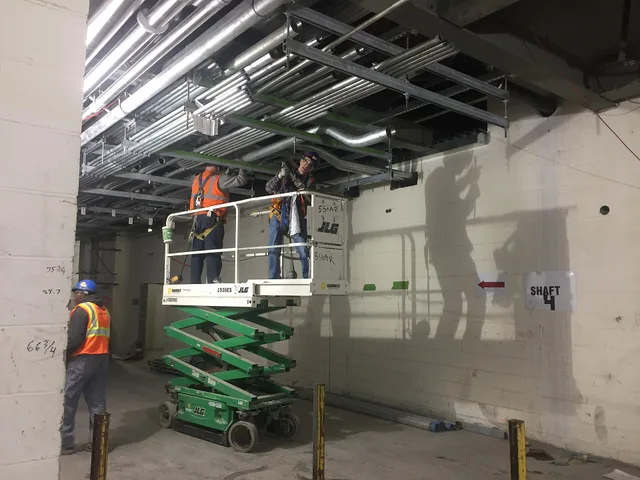
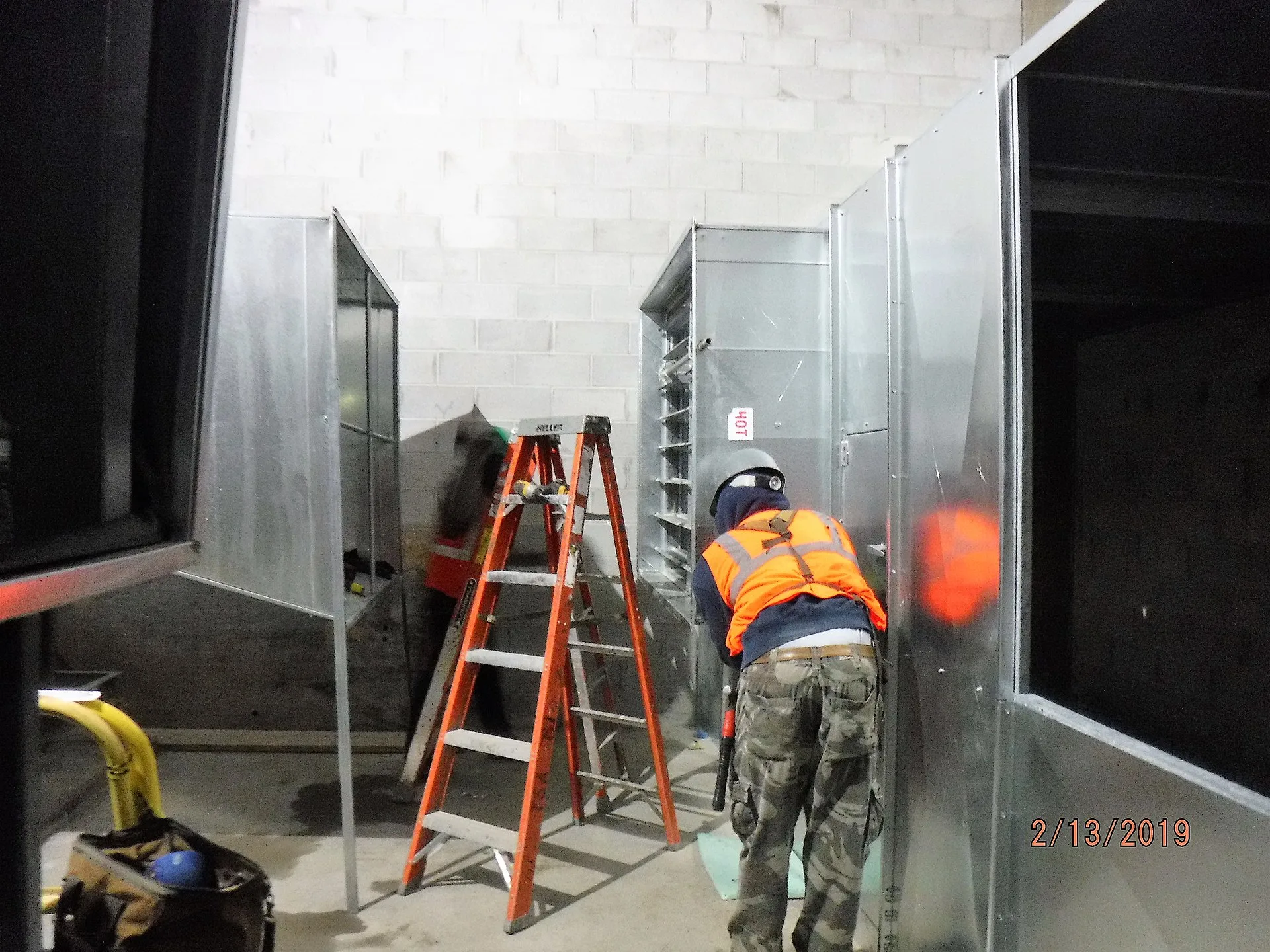
Vertical chases in condo towers carry exhaust and sometimes supply air between floors. Changing one unit can affect stack pressure and fire separations. Work in a single suite usually needs building management approval and coordination with other trades.
Shared systems mean ductwork cannot be altered in isolation. A kitchen exhaust upgrade on the 12th floor may need a new roof termination or a balancing report for the whole stack. Engineering and commissioning costs sit inside condo tower ductwork pricing for that reason.
Condo work also runs on tight schedules. Elevator access, noise bylaws and resident complaints limit working hours, so deliveries and debris removal have to be planned around building rules. The result is higher labour per hour and more supervision time.
Each corporation sets its own approval, elevator and after-hours fees. Ask for the building's fee schedule before you quote a suite.
For multi-unit buildings, rental market data helps set expectations. The 2025 Rental Market Report | CMHC shows how tight Toronto's rental market is, which supports investment in unit upgrades. Use that context when pitching ductwork improvements to landlords and property managers.
When pricing condo work, separate base building requirements from suite-specific scope. That split reduces disputes and change orders.
Ontario skilled trades rules and labour rates in Toronto
Ductwork installation in Ontario falls under skilled trades legislation. The trades qualification and licensing statute sets out the framework for who may legally perform certain work, so check crew certifications before quoting.
The framework now sits in the Building Opportunities in the Skilled Trades Act, 2021, which replaced the Ontario College of Trades and Apprenticeship Act, 2009. Skilled Trades Ontario administers it. Gas equipment and venting are separate, governed by the Technical Standards and Safety Act, 2000 and enforced by the Technical Standards and Safety Authority (TSSA).
Consumer protection rules also apply to residential contracts. In Ontario the core statute is the Consumer Protection Act, 2002. The consumer protection statute covers consumer agreements and cancellation rights, and ductwork contractors should use written contracts that meet them. Our hvac contractor licensing requirements guide covers the wider compliance picture.
Toronto labour rates reflect demand and cost of living. Journeyperson sheet metal workers and HVAC technicians command premium wages in the city. Add WSIB coverage, CPP, EI and vacation pay and the loaded hourly cost rises further.
Loaded rates for Toronto residential retrofit work typically run $85 to $110 per hour, and after-hours condo work pushes past that. That loaded rate is what belongs in a quote, never the advertised wage.
Retrofit work in occupied homes pays more than new construction because of access, protection and cleanup. Condo tower work adds supervision and after-hours premiums.
Permits come from two authorities. Toronto Building issues the building permit for HVAC and ductwork alterations, and TSSA handles gas work through registered contractors.
Toronto Building prices its permit on the declared value of construction, with a minimum charge. TSSA charges per gas appliance or vent. For a single-family retrofit the two together commonly cost a few hundred dollars, so check both published fee schedules before you quote.
Our how to price hvac contractor services article explains how to build a margin that holds up.
Material costs and sourcing for Toronto ductwork jobs
Ductwork materials include galvanized sheet metal, flex duct, insulation, sealants and fittings. Prices move with steel markets and shipping. Toronto contractors can source locally from sheet metal suppliers or buy prefabricated sections from larger fabricators.
Toronto-area sources include metals distributors such as Russel Metals and Samuel, Son & Co. for flat stock and coil. HVAC distributors such as Wolseley Canada and Noble carry flex duct, grilles, sealants and fittings.
Ask for a current price per pound on 24 and 26 gauge galvanized sheet, and ask how the fabricator quotes its forming charge.
Local fabrication cuts lead times but costs more per pound than imported flat stock. Complex retrofits usually need custom fittings, and those take time to measure, fabricate and install. Price them as their own line.
CSA standards apply to many components and to gas appliance venting. Specify CSA-rated materials and keep the documentation. CMHC publishes housing research that can inform renovation budgets and financing; the Housing research, finance and mortgage insurance in Canada | CMHC page is a useful reference for professionals.
Waste is a real cost in retrofit work. Odd angles and short runs generate offcuts, so add 10 to 15 percent waste to material estimates for older homes. In condo chases, prefabrication can cut both waste and site time.
Freight and storage matter downtown, where sites often lack loading space. Deliveries need scheduling, and that logistics cost has to appear in the quote.
Material costs and sourcing
| Cost category | Typical share of ductwork retrofit quote | Notes for Toronto |
|---|---|---|
| Labour | 45 to 60 percent | Loaded rates, supervision, after-hours premiums |
| Materials | 20 to 30 percent | Sheet metal, flex, insulation, sealants, fittings |
| Permits and inspections | 5 to 10 percent | Varies by scope and authority |
| Equipment and access | 5 to 10 percent | Lifts, hoists, protection, disposal |
| Overhead and profit | 15 to 25 percent | Office, insurance, warranty, margin |
Worked example: ductwork retrofit in a Toronto semi-detached home
A semi-detached house in Toronto's east end, built in 1925. The homeowner wants a new furnace and central air, which requires a full ductwork retrofit. The basement is low and the second floor has no existing ducts. Scope covers design, permits, installation and balancing.
Here is how the price builds.
Worked example: Toronto semi-detached
- Site assessmenttwo visits, asbestos testing, load calculation. Budget 6 hours at the loaded rate.
- Design and permitslayout drawings, permit application, inspection scheduling. Budget 8 hours plus permit fees.
- Material takeoffsheet metal, flex duct, insulation, grilles, sealants. Add 12 percent waste.
- Installationtwo-person crew for six days, including protection, patching and cleanup.
- Commissioningairflow balancing, thermostat setup, homeowner walkthrough.
Labour totals 96 crew hours. At a loaded rate of $95 per hour, near the middle of the Toronto range, that is $9,120. Materials run $4,800 with waste. Permits and inspections add $600. Equipment and disposal add $700. Overhead and profit at 20 percent brings the total to roughly $18,264 before HST.
Those figures are illustrative, not a market rate. Substitute your own loaded rate, material costs and waste factor. Every older home ductwork Toronto job has unknowns, so present a range and explain what could move the price. A clear hvac contractor quote template shows line items and assumptions.
Condo towers follow the same logic with added building coordination. A single-suite exhaust upgrade might take two days on site but a week of scheduling and a balancing report. Those soft costs belong in the quote.
How to quote Toronto ductwork work with confidence
Start with a site visit. Measure, photograph and note access constraints. Ask about asbestos, previous renovations and building rules. The more you know, the fewer surprises later.
Build the price from the bottom up: loaded labour hours, material quantities with waste, permit fees, equipment. Then add overhead and profit. Our hvac contractor pricing guide walks through this method in detail.
Separate labour and materials in the quote. Clients accept that materials fluctuate, but they resist vague labour charges. Show hours and rates, and that transparency supports higher margins on complex work.
Include a scope checklist with every quote. It protects both parties.
- Site access and protection plan
- Asbestos and hazardous material testing
- Permit application and inspection scheduling
- Duct layout and load calculation
- Material specifications and CSA ratings
- Balancing and commissioning
- Cleanup and debris disposal
Review your margins by job type. Ductwork retrofits should carry higher margins than simple service calls because of risk and complexity. Our profitable hvac contractor services article ranks services by margin potential.
Track actual costs against estimates after each job. Compare hours and materials to the quote, then adjust rates and waste factors. Over time that data makes Toronto ductwork pricing more accurate and more profitable.
HST applies to ductwork work in Ontario at 13 percent. Show the subtotal, the HST and the total on every quote.
A substantial renovation, generally 90 percent or more of a home's interior, can qualify for the GST/HST new housing rebate. The homeowner claims that rebate, not the contractor.
Payment terms belong in the written contract. A deposit of 10 to 25 percent is common on Toronto residential work, with the balance billed at rough-in, commissioning and closeout. Hold the final payment until the balancing report and inspection sign-off are delivered.
Common questions
How much does ductwork retrofit cost in Toronto?
Costs vary widely with home age, access and scope. A full retrofit in an older semi-detached home often runs from $12,000 to $25,000 before HST, and condo suite work is usually less but adds building coordination fees. Treat those as a range to test against your own labour and material figures, not a fixed rate.
Do I need a licensed contractor for ductwork in Ontario?
Certain work falls under skilled trades legislation, so check the Ontario statute for licensing requirements. Using certified trades protects you and helps with permits and inspections. Confirm the specific requirements with the relevant authority before you quote.
How do condo towers affect ductwork pricing?
They add coordination, after-hours work and shared-system constraints. Vertical chases and fire separations require engineering review, which raises labour and supervision costs. Separate base building requirements from suite scope so those costs stay visible.
What labour rate should I use for Toronto ductwork quotes?
Use the range in the labour section as a starting check, then build your own figure from payroll, WSIB, CPP, EI and supervision costs. Toronto rates are among the highest in Canada, so review them quarterly.