Guides
New vs Used HVAC Contractor Equipment: What to Check
A five-question checklist for new vs used HVAC contractor equipment: safety, readings, uptime, parts and rental, without price guesswork.
What to take away
- There is no general answer on new vs used HVAC contractor equipment. Run the audit per item, because a used van and a used vacuum gauge are completely different decisions.
- Three categories decide most of itthings that produce a reading, things that keep someone safe, and things that only move or hold.
- Total cost of ownership, not purchase price. Downtime on a service vehicle is the largest hidden number in this trade.
- Renting is the option people skip, and it is often the right one for equipment used a few times a year.
- This audit is about risk, not a price listthe same used item can be a bargain or a liability depending on its history.
The five-question audit
Ask these of every item, in this order. The first two are usually decisive.
Five Questions Before You Buy
- Does it produce a customer-facing number?
- Does it keep someone safe?
- What does a failure cost on a working day?
- Are parts and service still available?
- How often will it be used?
- Does it produce a number you will show a customer?Instruments whose readings you rely on carry a verification burden. A used one with no history is a number you cannot defend.
- Does it keep someone safe?Fall protection, electrical safety equipment and anything with a rated load are not places to buy an unknown history.
- What does a failure cost on a working day?Not the replacement cost. The lost capacity, the rescheduled customer and the reputation.
- Are parts and service still available?An orphaned model is cheap once and expensive thereafter.
- How often will it be used?Below a certain frequency the answer is not new or used, it is rent.
Applying the audit by category
Usual answer
- Measurement instruments
- New, or used only with verifiable history
- Safety equipment
- New
- Recovery and refrigerant equipment
- New or dealer-serviced used
- Power and hand tools
- Used is fine
- Lifting, moving, storage
- Used is fine if rated and inspected
- Fabrication equipment
- Used, or rent until volume justifies it
- Vehicles
- Depends entirely on downtime
Why
- Measurement instruments
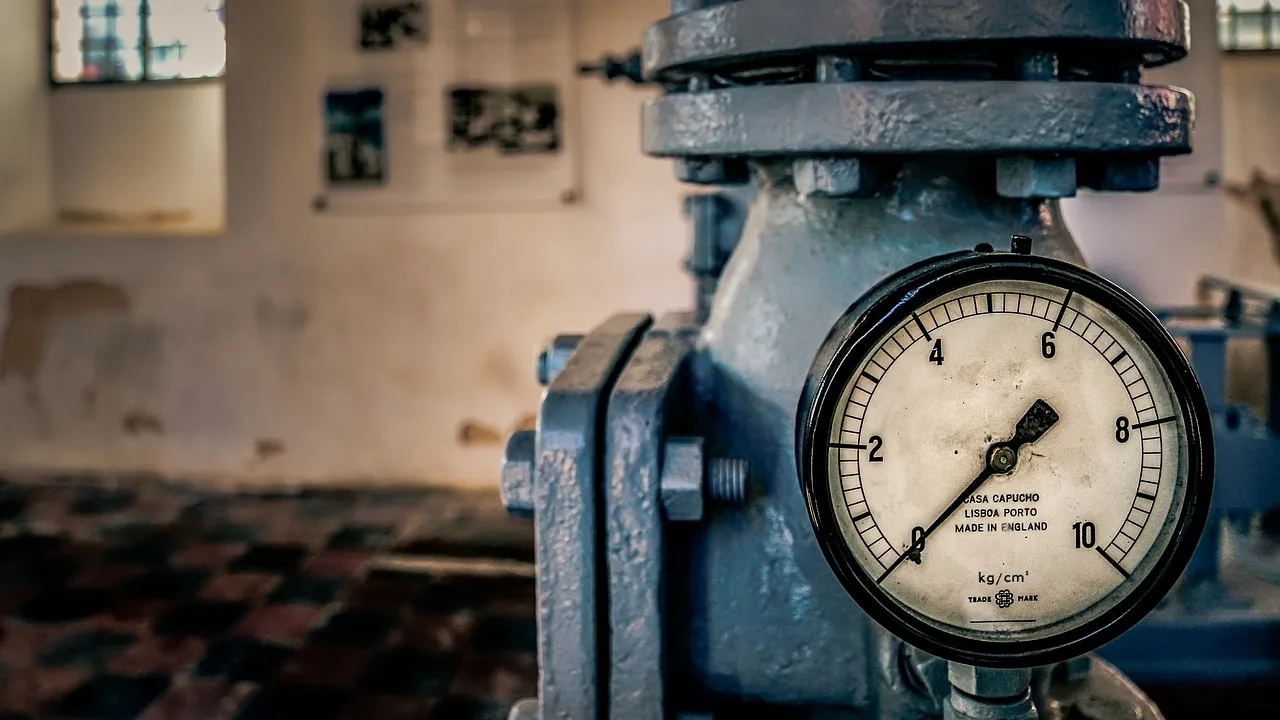
- The reading is the product, and drift is invisible
- Safety equipment
- No history means no assurance, and the failure mode is a person
- Recovery and refrigerant equipment
- Regulated activity, and contamination history matters
- Power and hand tools
- Condition is visible and failure is inconvenient rather than dangerous
- Lifting, moving, storage
- The rating plate and inspection record are what you are buying
- Fabrication equipment
- Low utilization in most small firms
- Vehicles
- See below
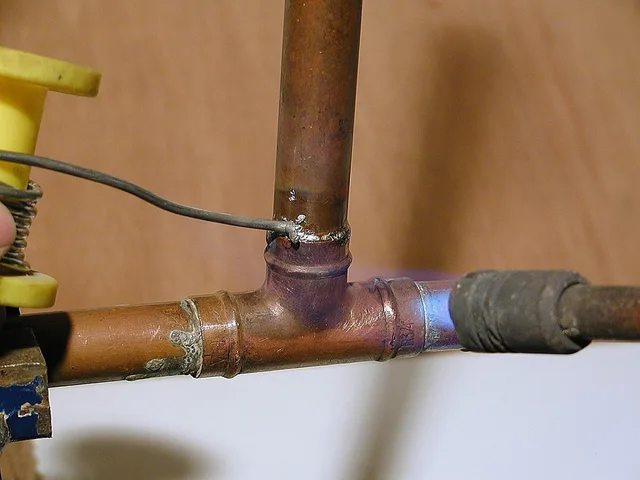
Concretely, the categories look like this. Measurement: manifold gauge sets, vacuum gauges, electronic leak detectors and combustion analyzers from brands such as Fluke, Fieldpiece and Testo. Refrigerant: recovery machines and vacuum pumps from Robinair, Appion and Yellow Jacket. Fabrication: brazing rigs, sheet metal brakes and shears. Support: ladders, fall protection, lifting gear and storage. For ductwork work in particular, the fabrication category is where equipment condition shows up in how fast a run can be made and sealed. Vehicles are their own case, next.
The vehicle, which is its own problem
A service vehicle is not equipment. It is capacity.
A day off the road is a day of sold capacity you cannot deliver, plus the customers moved and the technician paid. A single day off the road means booked calls moved, a technician idle, and a customer who may not rebook. That number swamps the difference between a new and a used purchase in most comparisons, which is why the right question is not price but predicted downtime.
Three things to establish before buying used: documented service history, the availability of parts and a mechanic who can turn it around quickly, and whether the payload after fit-out is still within the vehicle's rating. Ask for the maintenance log, the last timing belt or water pump service, the rust inspection around the frame and mounts, and a pre-purchase inspection by your own mechanic, not the seller's. Fitting out a vehicle whose payload is already committed to shelving and stock is a mistake you discover slowly.
What goes into the fit-out, and how much stock it has to carry, comes from the equipment checklist for new owners.
Recovery and refrigerant equipment
Treat this category carefully for two reasons.
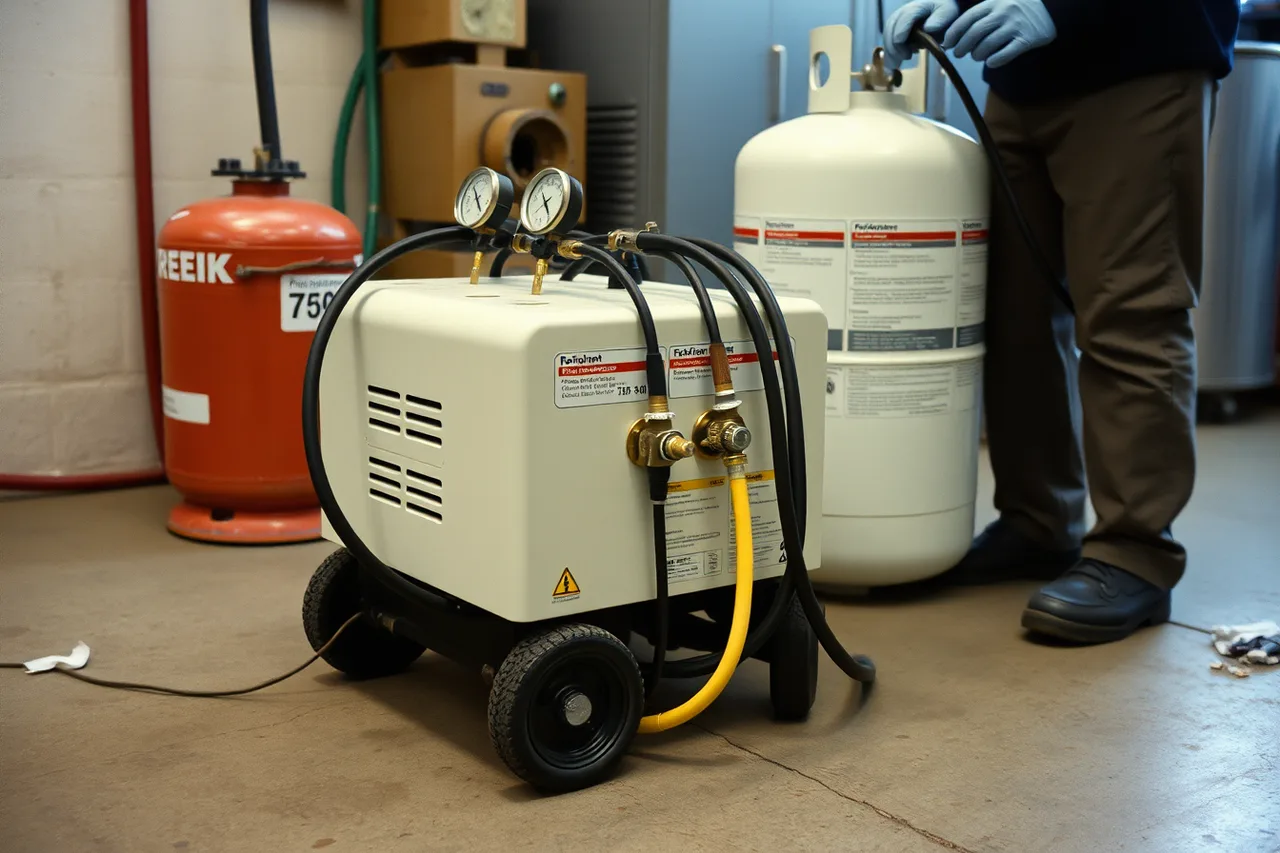
First, refrigerant handling is a federally regulated activity, and who may perform it is set by the EPA Section 608 technician certification program. The certification types are Type I (small appliances), Type II (high-pressure systems), Type III (low-pressure systems) and Universal, and they are issued through EPA-approved certifying organizations such as ESCO Institute and HVAC Excellence. Owning equipment is not a permission.
Second, contamination history matters with recovery equipment in a way it does not with a drill. Buying from a dealer who has serviced and documented the unit is a different transaction from buying from a listing.
Reading a used purchase as a sum
Write the comparison as a sum rather than as a price.
What Used Equipment Really Costs
- Purchase pricewhat you pay up front
- Expected repairsover the period you hold it
- Downtime valuethe term usually left out
- Verification costinstruments and rated loads
- Resale valuesubtracted at the end
Ownership cost = purchase price, plus expected repairs over the period you will hold it, plus the value of the downtime it causes, plus any verification or certification it needs, minus what it is worth at the end.
Two terms in that sum are usually left out. Downtime, discussed above. And verification, which applies to instruments and to anything with a rated load. Both are larger than the discount that made the used item attractive.
For an instrument, verification means a calibration check against a reference traceable to NIST, performed by the manufacturer's service center or an independent calibration lab such as Transcat or Trescal, and documented with a dated certificate. Without that certificate you are carrying an opinion, not a reading.
When renting beats both
Rent when the utilization is low, when the item is bulky to store, or when you need a capability for one job that you are not yet ready to sell routinely. General equipment rental yards such as United Rentals, Sunbelt Rentals and Herc Rentals, and supply houses with a rental counter, are the usual places to look, and the question to ask is what happens when the unit fails mid-job.
Specialized fabrication equipment, larger lifting equipment, and specialty instruments used a handful of times a year all fit that description. Renting also gives you a real answer to the frequency question: after three or four rentals, you know whether the demand is a pattern or a coincidence.
What you should not rent is anything a technician needs to be fluent with. Familiarity is worth more than the equipment on instruments you use under pressure.
Buying used without regret
- Ask what it was used for and by whom, and treat a vague answer as information.
- For anything with a rating, buy the inspection record as much as the item.
- For instruments, insist on a verification or arrange one before first use, and log the date.
- Check parts availability before you check the price.
- Buy from a business that will still exist if there is a problem.
- Record the purchase properly, whatever the source. The standard for records that clearly show income and expenses is described in the IRS recordkeeping guidance, and the way the cost is written off — Section 179 expensing, bonus depreciation, or regular depreciation under MACRS on IRS Form 4562 — is worth putting to an accountant before you buy rather than after.
The obligations that do not change
Whatever you buy, the employer's duty to run a safety program rather than simply own equipment is described in the OSHA guidance on safety and health programs. Specific standards still apply to the used item: ladders under 29 CFR 1910.23, fall protection under 29 CFR 1910.28, and electrical safety-related work practices under 29 CFR 1910.333. A used ladder does not come with a lower obligation.
Nor does anything here change the registrations behind the work, which are covered in the licensing and compliance guide, or the training needed before a person uses a new item competently, which is part of the hiring and training guide. The wider order of purchase, wave by wave, is in the equipment and setup guide.
Common questions
Is buying a used van a false economy?
Not necessarily, and the deciding factor is not age. It is whether you can get it repaired quickly and whether its payload still works after fit-out.
Can I buy used instruments and have them verified?
Often, and it is the honest way to do it. Budget the verification into the purchase and check that the manufacturer still supports the model, because an instrument nobody will service is not a bargain.
What about equipment from a firm that closed?
Auctions and closures can be genuine opportunities, particularly for storage, lifting and fabrication equipment. Be careful with anything regulated, anything rated, and anything whose history nobody can describe. Auction houses and liquidation sales, dealer trade-in stock, online marketplaces such as eBay and Facebook Marketplace, and government surplus sites like GovDeals are the usual sources; what separates them is less the listing than the documentation that comes with the item.
Should my first purchase list be all new?
No, and trying to make it so delays the start. Put new money where the reading, the safety and the uptime are, and buy the rest carefully.