Guides
HVAC contractor quality assurance: audit ten jobs a month
An HVAC contractor quality assurance audit: ten completed jobs a month, the artifact to find at each stage, and what a missing record says about your process.
What to take away
- The audit reads the job record, not the technician. Missing artifacts point at process problems, not at individuals.
- A tick with no artifact is not a check. If nothing was recorded, treat the item as not done.
- Three questions per artifactis it present, does it say what it should, and would it stand up in a year?
- Where an artifact is repeatedly missing, the standard behind it is usually unusable on a real day.
- No target readings appear. What a reading should be comes from the manufacturer's instructions and the applicable design documents for that job.
Sample ten jobs and read the record
Take ten completed jobs a month at random and check each job record for artifacts rather than ticks. An item with nothing recorded counts as not done, whatever the technician remembers.
- Pull ten completed jobs at random, not the ones you happen to remember.
- For each stage, find the artifact listed in the table below.
- Ask three questions of it. Is it present? Does it say what it should say? Would it stand up if a customer or an insurer asked for it in a year?
- Mark each item present, missing, or not applicable with the reason written beside it.
- Count the missing artifacts by stage, never by technician.
Run the audit on the records afterward, not by watching people. Watching changes what people do for an hour, while the record shows what happened on the day nobody was looking.
What the record should hold at each stage
Each stage of a job leaves a different artifact, and the audit looks for exactly that one. The test at the survey stage is simple: a stranger could deliver from the quote and work from the survey record.
| Stage | Artifact to find | The record fails when |
|---|---|---|
| Survey and quote | Data plate photographed, duct, electrical, venting and condensate notes, the customer's own words, exclusions listed | A stranger could not deliver from it |
| Before work | Permit position, manufacturer's installation instructions, certifications held, instruments within their verification interval | A second trip was foreseeable that morning |
| During work | Photographs before removal, refrigerant recovery log, measured evacuation, condensate test, deviations in writing | A deviation cost money without written agreement |
| Startup | Startup and commissioning record with readings | A reading has no comparison reference |
| Handover | Handover pack with model and serial numbers, warranty explanation | The customer cannot say what is outstanding |
| After the job | Same-day invoice, complete job record, return visits with cause codes | A return visit has no cause code |
Check the quote for the load calculation statement: whether one is being performed and, if not, why not. Instruments are the other early check, and the asset list in the equipment and setup guide is the reference for their verification interval.
Refrigerant, duct and evacuation records
The refrigerant recovery log should show the refrigerant type and amount, equipment identification, date, technician and recovery container. Records required by EPA Section 608 (40 CFR Part 82, Subpart F) are retained, so the audit confirms that they exist.
EPA regulations under Section 608 of the Clean Air Act require technicians who maintain, service, repair or dispose of equipment that could release ozone-depleting refrigerants to be certified under Section 608. The audit therefore checks the credential as well as the log. The compliance checklist lists the other records to hold alongside it.
For ducted work, the record should show the design and installation were checked against ACCA Manual D and applicable SMACNA duct construction standards. It should also show that sealing products were selected for the application and rated or listed under UL 181 or UL 181B, as applicable.
Evacuation belongs in the same read. The record should show it was measured rather than timed by habit.

Read the commissioning record first
Open the startup and commissioning record before anything else on the job file. It should be job-specific, completed with the ACCA 5 QI HVAC Quality Installation Specification as the quality-installation framework, and it should carry the applicable readings with their comparison references.
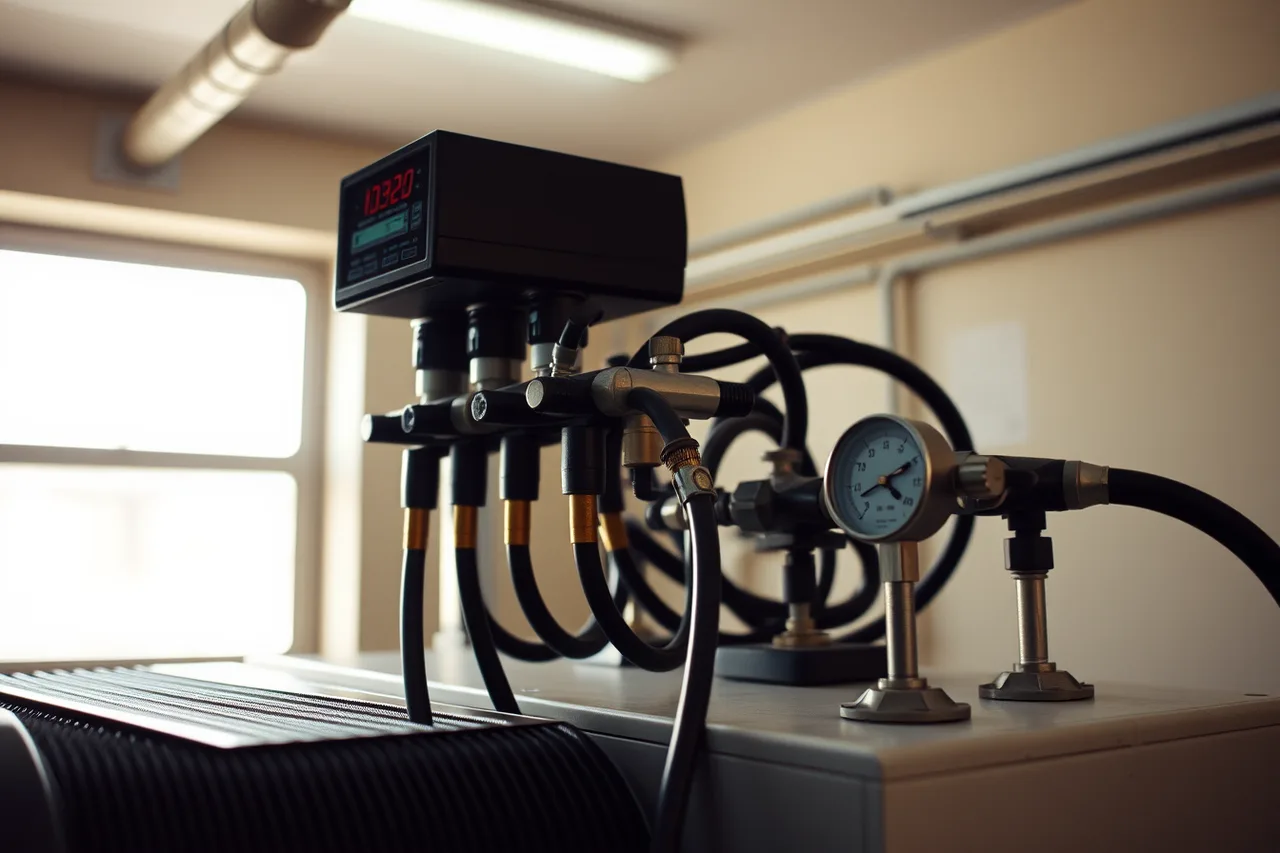
The readings to look for are airflow and external static pressure for ducted systems, entering and leaving air temperatures, refrigerant pressures and line temperatures where applicable, voltage and current, and combustion readings on fuel-burning equipment. A reading that does not apply should say why.
The record also compares each reading with the manufacturer's installation instructions and the applicable design documents. A reading outside those requirements is escalated before the technician leaves the site, and the record names the reference used.
The commissioning record gives the owner evidence that the equipment was started and checked against the manufacturer's instructions and the job's design documents. Keep it with the other job artifacts for follow-up, warranty questions or a customer dispute.
What a missing artifact tells you
Where an artifact is repeatedly missing, the standard behind it is usually unusable on a real day rather than ignored out of laziness. Rewrite the standard so it works on a real day, then audit the same stage again the following month.
How to word a standard so that it can be followed is covered in writing service standards. The standard needs a record to point at, and the audit supplies the list of records that were not there.
Records also have to hold up outside the business. The IRS advises that you keep adequate records to prove your expenses, which is another reason the job record has to be complete.
Why measurement rather than opinion is the basis for all of this is set out in the service quality guide for owners.
Common questions
Is this too long for a real job?
Most items take seconds and produce a photograph or a field on a form. The two that take real time, the survey and commissioning, are the two that decide whether the job succeeds.
Who fills it in?
The technician doing the work, on the device they already carry. A separate quality person filling it in afterward is inventing a record rather than keeping one.
What if an item does not apply?
Mark it as not applicable rather than leaving it blank. A blank is ambiguous a year later, and ambiguity is exactly what the record exists to remove.
How often should the checklist itself change?
Twice a year, plus whenever a recurring problem shows an item is missing. Add items from real failures, and retire ones whose artifact nobody has ever needed.